english
THE FRUITS of TRUE MONKHOODTHE FRUITS of TRUE MONKHOOD'BUDDHISM IN PLAIN ENGLISH' in its series by Phrabhavanaviriyakhun (Phadet Dattajeevo)
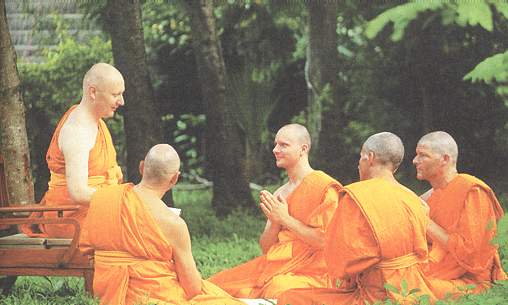
CHAPTER 1. FOREWORD TO THE SAMA~N~NAPHALA SUTTA The word "saama~n~naphala" means the result or fruit of being a monk — or the "point" of ordaining within the Buddhist religion. The Buddha taught that anyone who keeps purely and strictly to his vocation as a Buddhist monk would receive many benefits. Most things in the world, which you can do have both "pros" and "cons" but ordaining as a monk has only benefits (if the ordained follow his vocation purely). The benefits received by a monk come sequentially starting with superficial benefits, which can be immediately seen — such as being honoured by the general public, peacefulness of body, speech and mind, the wisdom to consider matters of the world in a more thorough way, real understanding of life and the world — allowing one to be a good friend to oneself, conducting one's life in uncompromised accordance with the teachings of the Buddha, extracting oneself from the influence of defilements and being a good friend to others — pointing to the right way of life practice for others — and ultimately to attain the paths, fruits and Nirvana itself.
|
Introduction
Introduction Ordination is an essential part of life for all male 'Buddhists. The individual cuitwates merit that carries over into the next life and receives many benefits for his present life. Furthermore, he gains Iqiowledge, wisdom, a greater understanding of the world, both socially and economically as well as physical, mental and spiritual well-being. Those who are ordained are not merely individuals who shave their heads and wear monks' robes, they must train, practice, and embody the teachings of Lord Buddha.
The Benefits of Ordination
The benefits of ordination are separated into two categories.
Direct benefits. 1.For people who no longer suffer from desire or lust, and have become an Arahant, they will receive the benefits as follows: a)All of your old suffering from the past will disappear b)The new suffering that might happen, has no chance to give its retribution because you have banished craving from your life c) You will become a model of good conduct and moral fiber for all those in your community 2.On the Dhamma side of things: a)You will be pure both physically and spiritually b)You will be a kind and generous person c)You will have wisdom Duties and Responsibilities for MonksThe main purpose of ordaining is to free yourself from worldly commitments and worries so that you may Have the opportunity fully to commit yourself to meditation and breaks away from the shackles of desire so that you may find true happiness. How do Monks Free themselves from Worldly Desire? The answer to the above question is: Once ordained as a monk, you must fulfill all required and recommended duties based on tenets clearly specified by Lord Buddha. Kiccavatta (Duty) derives from the combinati on of two words... Kicca and vatta Kicca means things that one MUST do, otherwise you will surely regret not having done so. Vatta means things that you SHOULD do, although it is not required. If you do not do these things, the consequences are not detrimental. It will not bar you from monkhood, but it could result in the lessening of respect for your station as a monk. If you do these things, the level of respect people will accord on you will only improve and strengthen. These duties will also help to free you from worldly desire. ' Senior monks have developed the following ten primary duties for monks to fulfill: 1. Alms Gathering 2. Temple cleaning 3. Confession 4. Chanting and Meditation 5. Reflection 6. Caring for Your Preceptor 7. Management, Maintenance, Exercise 8. Dhamma and Monastic Studies 9. Caring for Temple Property and Responsibility 10. Behaviour Worthy of Respect Any monk who can fulfill these duties may not yet be free from worldly desire but will surely lessen the influence of such desires.
Ordination Traditions during the Time of the BuddhaOrdination Traditions during the Time of the 'Buddha
In the early Buddhists era, all of Lord Buddha's disciples were monks, without any novices, when young Prince Siddhattha was ordained, his ordination was referred to as "lower ordination" (pabbajja), a term which nowadays is used to refer to novices who were ordained. However, he was already too old to be considered a novice. From the time Lord Buddha allowed novices to be ordained, the ordination of monks became known as higher ordination or {upasampada).
The Importance of OrdinationThe Importance of Ordination would like to begin my talk to-day by first asking you all one simple question. Ask yourself, up to the present day, what is it that you want most in Life? Alternatively, what is it that you are seeking? I have asked this question many times before, and the answer has always been the same. We are all looking for happiness. All of us here today seek a way to true happiness.
Whether we live one lifetime, or ten thousand lifetimes, without the wisdom of Lord Buddha, we will never find true happiness. There are some groups of people, who believe that worldly pleasures bring true happiness, but this is not true. [read more click button below] |